Without a Doubt? How Science Works
New exhibition at Teylers Museum from 2 October
Tuesday 9 June 2026
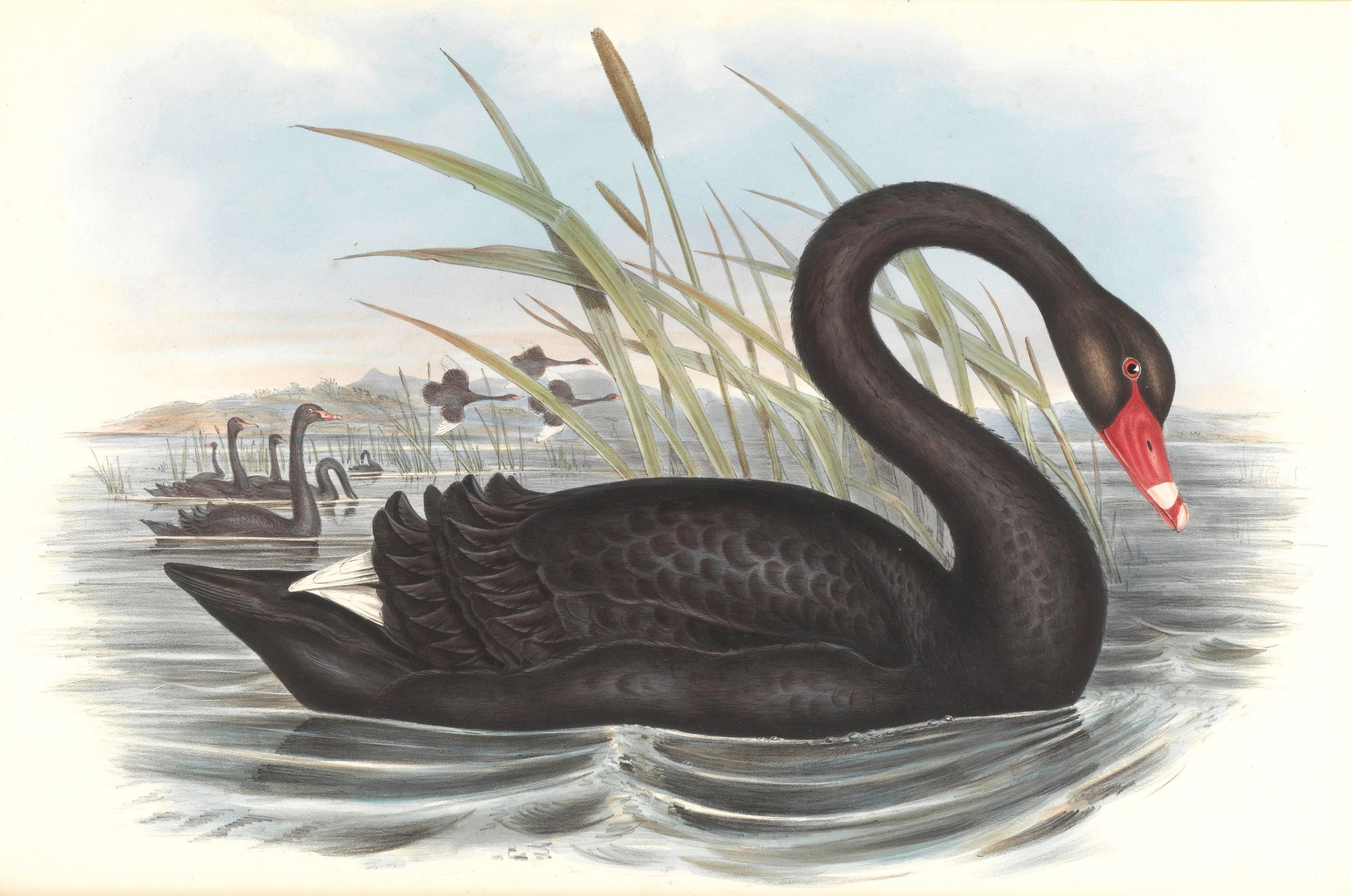
Once upon a time, people believed that black swans did not exist. Just like purple cows and flying pigs, black swans were considered synonymous with the impossible: swans could only be white. Period. But then, in the 17th century, actual black swans were spotted in Australia. Scientists now suddenly had to adjust a theory that they had never doubted and believed to be the absolute truth for centuries. It just goes to show: science can never offer absolute truths. However, it is not just an opinion either. Science is and remains the best method we have of acquiring reliable knowledge. But how does science actually work? Step into the wonderful world of science and try to find your own answers to this question in the exhibition 'Without a Doubt?', on display at Teylers Museum in Haarlem from 2 October. Surprising historical and contemporary examples bring five basic principles of science to life.
Find evidence: sometimes as much as 500 years later
In science you first have to find evidence to substantiate a theory. And that may sometimes take centuries. An example of this in the exhibition is Leonardo da Vinci’s research into aortic valves. In the 15th century, he had already deduced how they worked, basing his findings on detailed anatomic research. In 2014, around 500 (!) years later, modern techniques finally allowed researchers to examine a beating heart inside a living body. As guess what? Leonardo was right.
Repeat: again and again and again
Another important principle in science is that others must be able to repeat your research: they have to arrive at similar results using the same method and new data. Science wants to study everything, and this even applies to questions like whether it is possible to read minds, to use telepathy. To eliminate the possibility that people accidentally guess what someone else is thinking, researchers came up with various reliable telepathy experiments. It is very important that these experiments are repeated often, under the right circumstances. That is because the element of chance can only be excluded if you get the same results with each repetition. With regard to telepathy, nobody has yet succeeded in doing this.

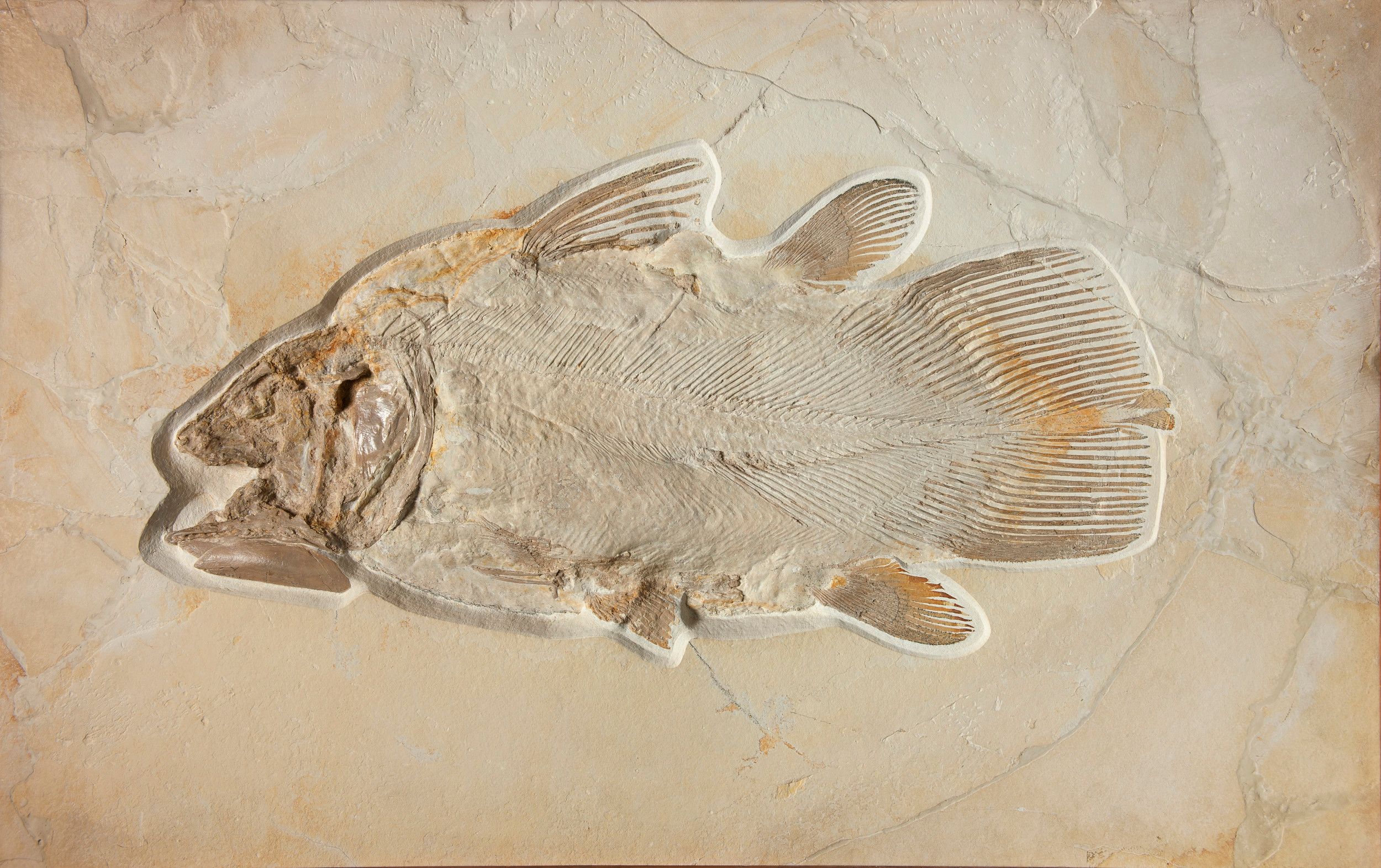
For a long time, Coelacanths were only known as fossils. Scientists believed them to be extinct – until a living specimen was caught in South Africa in 1938. This forced scientists to adjust their theory. Collection Teylers Museum
Adjust: overturning your theory
Black swans are a classical example of the principle of adjustment: proof to the contrary can debunk a theory. For a long time, scientists believed that the Coelacanth, a lobe-finned fish, was extinct. Until 1938 they had been known only to them as fossils. But then a living specimen from this group was caught off the South African coast. Scientists were perplexed.

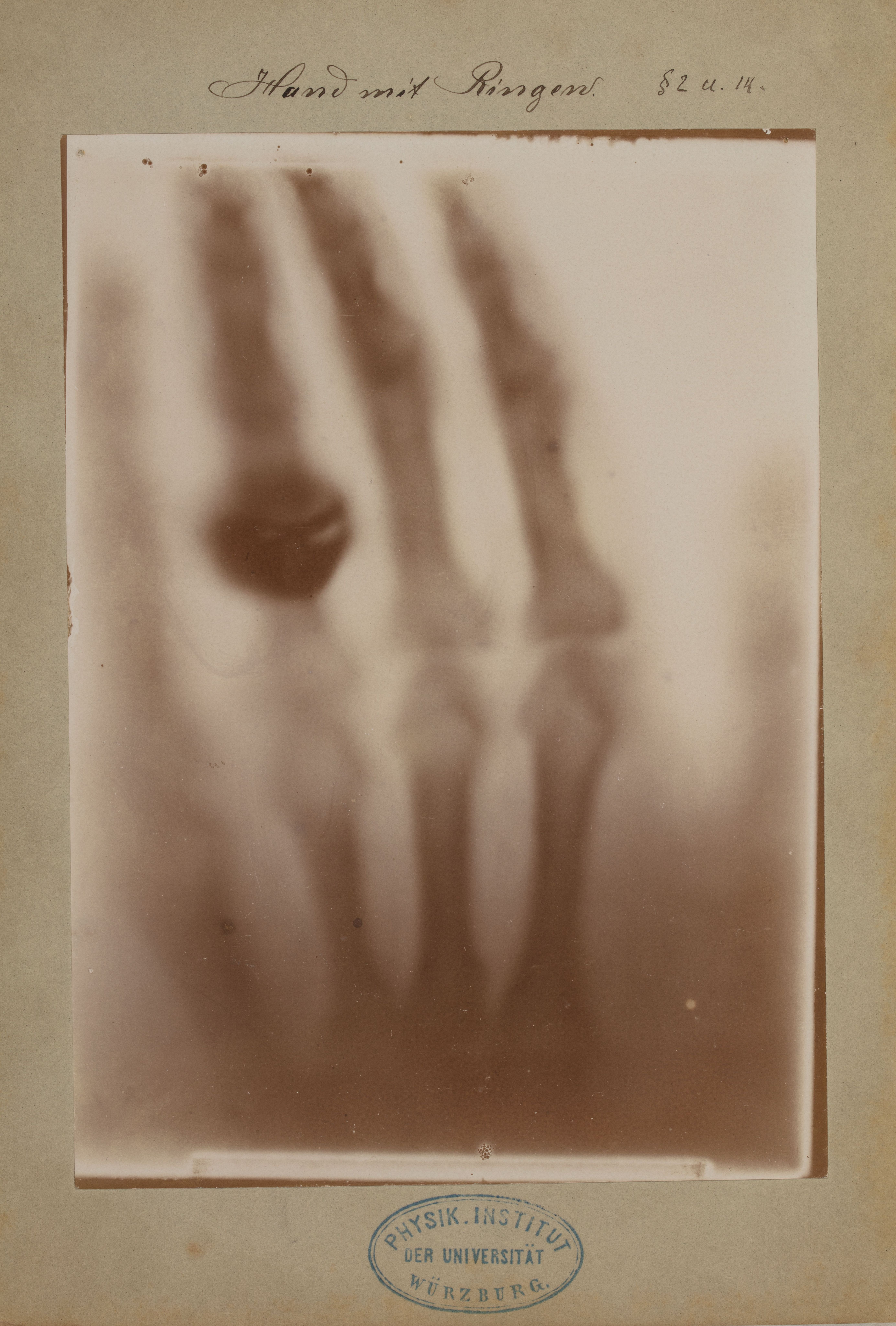
Wilhelm Röntgen sent one of the first sets of X-rays he produced to Professor Hendrik Lorentz – who later worked at Teylers Museum – to have them checked. Verification by colleagues is an important scientific principle. X-ray by W.C. Röntgen, the hand of Röntgen’s wife, 1895.
Collection Teylers Museum
Challenge: science as teamwork
Science is never a solo endeavour. Researchers are constantly critically assessing each other’s work. This critical perspective not only helps to spot mistakes, but can also uncover fraud. A famous example is the Piltdown Man. In 1912, Charles Dawson and Arthur Smith Woodward declared they had discovered the ‘missing link’ between apes and human beings in Piltdown, England. A sensational claim: not Africa or Asia, but England was now considered the birthplace of humanity. Decades later, however, it all turned out to be a hoax. Critical colleagues expressed their doubts and decided to re-examine the skull using new techniques. They found out the skull had been assembled from a combination of medieval human bones, the jawbone of an orangutang, and modified chimpanzee teeth.
Build on the shoulders of others
Knowledge progresses step by step, with every new generation of scientists building on the work of the previous. Old ideas are revised as scientists learn from other cultures or start working with improved techniques. Thanks to new insights, science is able to gradually get closer to ‘the truth’. Sometimes progress is slowed down: in Africa and Asia, for instance, people had already discovered a way to protect themselves against the most severe variations of smallpox centuries before Europeans and Americans. This technique, known as variolation, was initially greeted with suspicion in Europe, and therefore not introduced until around 1750. It then served as the basis for the development of vaccines. Thanks to progress like this, diseases like smallpox have now been completely eradicated.
Surprising examples
Finding Evidence, Repeating, Adjusting, Challenging, and Building On are the basic principles that form the foundation for all scientific research. Books, models, videos, and instruments used for research into telepathy or the alignment of the planets: the principles are explained with the help of surprising loans from institutions in the Netherlands and abroad as well as colourful examples from the collection of Teylers Museum. You can also study these principles for yourself: find out if you are stronger than air pressure or participate in an experiment to see if you are actually able to read people’s minds. With its contemporary design, the interactive exhibition allows you to discover that science is constantly evolving and that asking questions, raising doubts, and creative thinking are central to this.
Without a Doubt? How Science Works will be on view from 2 October 2026 up to and including 22 August 2027 at Teylers Museum in Haarlem. The exhibition is suitable for everyone over the age of 8.